The Traditional and Modern Production Processes of Ceramic Wares
Ceramic wares carry thousands of years of traditional craftsmanship and are essential daily necessities in life. The whole production of ceramic supplies is a rigorous and standardized process, which integrates natural mineral materials, elaborate manual operation and professional high-temperature firing technology. From plain household tableware to delicate decorative porcelain, all finished ceramics need to go through fixed core working procedures. Learning the complete making process of ceramics can help us understand the ingenuity behind ordinary utensils and feel the unique charm of traditional folk craftsmanship.
The foundation of fine ceramics lies in scientific raw material preparation. The core raw materials are pure natural clay, feldspar and quartz with stable texture. Workers strictly screen raw materials to remove hard gravel and sundries, then crush, filter and repeatedly stir the clay to discharge internal air bubbles. After long-term kneading and natural aging, the clay becomes delicate, soft and highly plastic. High-quality refined clay can effectively avoid cracking, deformation and other defects of semi-finished products in the subsequent processing and firing links, laying a solid foundation for producing qualified ceramic supplies.
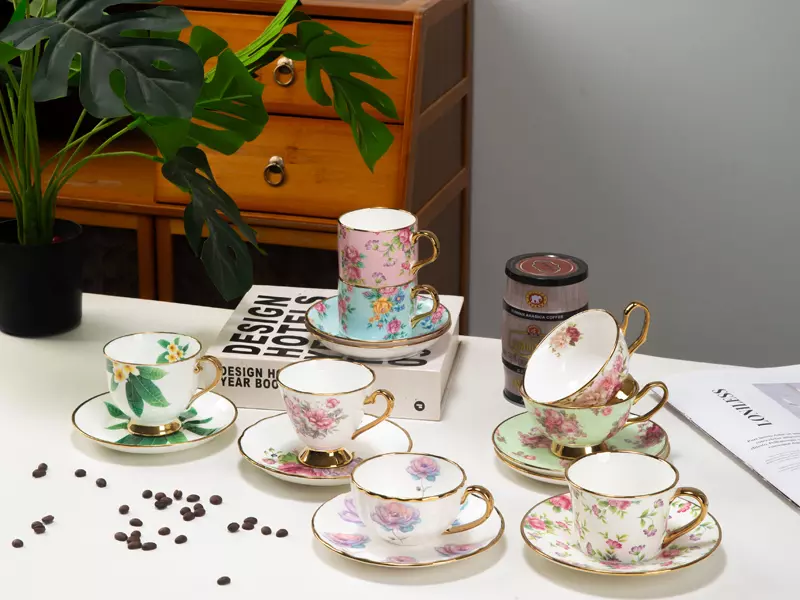
The second core procedure is green body shaping, which is divided into traditional handmade and modern mechanized modes. Potters adopt wheel throwing craftsmanship, skillfully pulling and trimming rotating clay to create irregular natural lines, full of unique handmade texture. Factories use mechanical pressing technology to quickly produce standardized green bodies, which is efficient and suitable for mass production of daily bowls, plates and tea cups. All shaped green bodies need to be placed in a ventilated place to air-dry naturally, and surface trimming and polishing are carried out after hardening to ensure flat and smooth edges without burrs.
Glazing is the key link to optimize the performance and appearance of ceramics. The uniform mixed mineral glaze slurry is evenly sprayed or brushed on the surface of the dry green body. After glazing, the ceramic surface forms a compact protective layer, which is waterproof, oil-proof, wear-resistant and corrosion-resistant, convenient for daily cleaning and long-term use. Meanwhile, colored glazes with different tones can be matched according to the design, enriching the decorative layers of ceramic supplies and improving the overall aesthetic grade of the utensils.
High-temperature kiln firing is the final and most critical process. The glazed green bodies are neatly placed in the sealed kiln, and the temperature is stably raised to 1200 to 1300 degrees Celsius. Under continuous high temperature, the clay matrix and glaze layer are tightly fused, turning soft mud blanks into hard, firm and safe food-grade ceramics. Craftsmen strictly control the firing temperature and time; improper temperature will lead to cracked bodies or dull glaze. After natural slow cooling, finished products are inspected for flaws and packaged for delivery.
To sum up, the production of ceramic supplies is an organic combination of natural materials, exquisite skills and temperature control. Every standardized procedure embodies the rigorous attitude of craftsmen. Traditional craftsmanship complements modern production technology, inheriting ancient skills while meeting the needs of contemporary life. Understanding the making process makes us cherish every ceramic utensil more and inherit the precious traditional ceramic craftsmanship well.
Previous: Modern Innovation and Future Development of Ceramic Supplies
Next: No More
